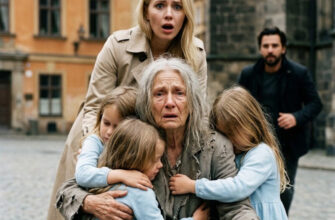
A little girl washed skirts every day for her stepmother, just to get a few scraps of food for herself and her little brother. Then one day, the millionaire arrived and…
Every morning, long before dawn, she got to work. Her small hands became damaged from scrubbing piles of clothes, until they bled. This life went on for three long years… until the day unexpected information surfaced — and her father, who had become a millionaire, found out.
Three years after Isabella’s death, Jonathan Montemayor was still living in the silent shadow of her absence. In their vast home, nothing had changed: their wedding portrait still hung above the fireplace, and the armchair where she used to tell stories to the children remained still, filled with memories.
Jonathan buried himself in work, running his hotel empire relentlessly. He left early, came back late. But the more he worked, the emptier he felt inside.
His children were his only light. Emily, seven years old, showed remarkable maturity. She looked after her little brother Lucas, three, who barely remembered their mother and clung to her for comfort.
Jonathan loved them deeply, but didn’t know how to show it. For him, providing for their needs was enough.
Then Karen entered his life.
A manager at one of his hotels, she was attentive, composed, always measured in her words. She gradually earned his trust. When she suggested that his children needed a maternal presence, he agreed without hesitation. Six months later, they were quietly married.
That day, Emily stood silently in a corner, wearing one of her mother’s old dresses. Lucas slept in a relative’s arms. Jonathan believed he was giving his children a fresh start.
He had no idea what awaited them.
Soon after, a business opportunity called him to Europe. Karen encouraged him to go, promising to handle everything. He entrusted her completely with the house and finances.
On the day he left, Emily, holding Lucas in her arms, fought back tears.
From that moment on, everything changed.
Within days, Karen dismissed the housekeeper and took full control of the household. She changed access codes, monitored every expense, and gradually revealed her true nature. All kindness vanished.
She began assigning chores to Emily.
At first harmless, they quickly became exhausting. No kind words, only strict orders.
Jonathan would call sometimes, but Karen always answered, claiming everything was fine and preventing the children from speaking to him. Gradually, distance grew.
Months passed, then years.
The house, once lively, became cold and silent. A rule appeared on the kitchen door: no food without work completed.
Emily’s days began in icy water and ended with a small portion of food — only if everything was perfect. Her main task: washing Karen’s delicate dresses, so heavy they cracked her hands until they bled.
The slightest stain cost her a meal.
Lucas, fragile and often sick, stayed close to her, watching in silence.
“Hermanita, are you almost done?” he would whisper.
“Almost,” she would reply, working harder so he wouldn’t go hungry.
…To be continued in the first comments 👇👇👇

Years passed.
At eleven, Emily was no longer a child, but a servant. Silent, exhausted, broken.
At night, Lucas would whisper:
“When is Dad coming back?”
“Soon,” she would say, without believing it.
Meanwhile, their father knew nothing. No truth reached him.
One day, a new driver noticed the scene: Emily washing clothes outside, Lucas lying down, sick. The image stayed with him. He shared it.
It reached a journalist.
Intrigued, she visited the house under the pretense of a report. Inside, everything looked perfect. Too perfect. But outside, reality was visible.
She wrote an anonymous article. The story spread.
Abroad, Jonathan read it.
Doubt seized him.
He recognized his house.
Without warning, he returned.
When he arrived, he observed.
Then he saw her.
Emily. On her knees. Washing.
His daughter.
His voice trembled:
“Why are you doing this?”
“To eat… for Lucas.”
That was enough.
He went inside and confronted Karen. She tried to justify herself. He didn’t listen.
He took his children and left.
Threats followed. He kept going.
They settled elsewhere, modestly. For the first time in a long while, they felt safe.
But the fight continued.
Karen filed lawsuits. She had evidence, power, support.
The verdict came: she won.
Jonathan lost almost everything.
Except his children.
When Emily asked:
“Did we lose?”
He replied:
“No. We start again.”
They rebuilt a simple, sincere life.
He learned to be present. To cook, to listen, to love differently.
Emily began to draw. Lucas learned to read. Their home slowly regained warmth and laughter.
Jonathan also created a small foundation to help children in need.

Meanwhile, Karen lost everything.
One day, they returned to the old house. Empty.
Emily looked at the place where she used to work.
“I want to remember it… so I never forget.”
Later, the place became a center for children, a place of renewal.
On the opening day, Emily hung clean laundry in the same spot—but this time to help other children.
Lucas handed out gifts, smiling.
Jonathan watched them.
He had lost wealth and power.
But he had found what truly mattered.

Peace.
A family.
A real home.
That evening, he wrote:
“One year has passed. We lost everything… but found what truly matters.”
And he finally understood:
Sometimes, losing everything is the only way to rediscover what truly mattered.