Accused of theft and slapped in front of guests by a billionaire, a housekeeper watches security cameras reveal the truth and expose a shocking scandali disguised myself as a homeless man to test my employees at my own restaurant, but their behavior horrified me and eventually forced me to call the police…
I disguised myself as a homeless man and walked into my own restaurant to find out how my employees treated people who couldn’t afford a proper meal. I expected a few judgmental looks and some rude remarks. But what I discovered was so alarming that I eventually had to contact the police.
My name is Richard Hayes, and I’m fifty-two years old.
Twenty years ago, I worked long hours washing dishes for just six dollars an hour. Today, I own Margaret’s, a restaurant I named in honor of my late mother.
For years, Margaret’s had been known for its warm, welcoming atmosphere, where everyone was treated with respect.
But recently, something had changed.
Customers who had been coming to the restaurant for nearly ten years had suddenly stopped showing up. Several longtime regulars had contacted me to say that the staff had become unpleasant and that the restaurant was nothing like the place they once knew.
No one had reported any particularly dramatic incident.
They simply said they no longer felt welcome.
Then, one evening, Miguel, a cook who had worked at Margaret’s for many years, pulled me aside.
“Richard, you should see what happens when you’re not around.”
I frowned.
“What exactly are you talking about?”
He hesitated before answering.
“Come here dressed like someone who can’t afford lunch. Don’t tell anyone who you are. Then you’ll understand.”
His words troubled me all night.
By Thursday morning, I had made my decision.
I went to a thrift store and bought a faded jacket with a torn pocket, a pair of worn-out jeans, and some shoes that had seen better days.
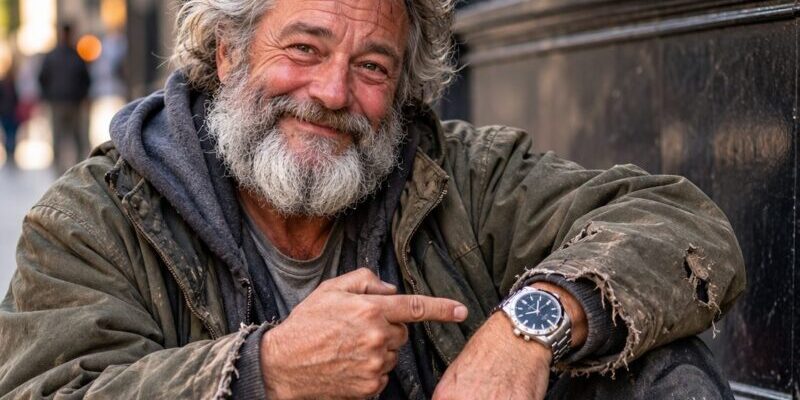
I left my expensive watch and wallet at home, skipped shaving, and made sure I looked like a man going through an especially difficult time.
The only valuable thing I brought was my cell phone, hidden inside my jacket.
I also had four dollars on me, divided between a few crumpled bills and some loose change.
Shortly after noon, I pushed open the glass doors of Margaret’s.
The familiar bell above the entrance rang.
I had installed that bell myself eleven years earlier.
And yet, that day, I was walking into my own restaurant as a complete stranger.
I approached the reception desk, where a young woman named Chloe was busy looking at her phone.
“Excuse me, miss,” I said politely. “Could I please have a glass of water and maybe some soup? I only have four dollars.”
She finally looked up.
Her eyes traveled over my faded jacket before settling on my dirty shoes.
Her expression immediately hardened.
“Sorry, we’re fully booked.”
I glanced around the dining room.
Nearly half the tables were empty.
“Are those tables reserved?” I asked.
“Yes,” she replied sharply. “You should try somewhere cheaper.”
I stood there, stunned.
This was the restaurant I had spent years building.
My mother’s photograph hung just a few feet away.
And an employee I had personally hired was treating me as though I didn’t even have the right to walk through the door.
I was about to leave when a gentle voice stopped me.
“Sir, wait a moment.”
I turned around.
A young waitress named Sophie had just come out of the kitchen.
She had noticed my shabby clothes and the coins I was holding, but she didn’t seem disgusted or annoyed.
Instead, she gave me a warm smile.
“Are you hungry?”
I nodded.
“Yes, miss.”
“Then follow me. We have a lovely table by the window.”
Chloe immediately protested.
“Sophie, those seats are reserved!”
The young waitress calmly gestured toward the empty tables.
“Then show me who’s reserved them.”
Chloe said nothing.
Without another word, Sophie led me to a comfortable table near the window.
A few minutes later, she returned with a generous bowl of hot chicken and dumpling soup, fresh bread, and a cup of coffee.
She carefully placed everything in front of me.
“Here you go, sir. Enjoy your meal!”
I took the four dollars from my pocket and placed them on the table.
Sophie gently shook her head.
“Keep your money. Lunch is on me today.”
“But I don’t have enough to pay for all this.”
“That’s okay,” she replied softly. “Someone once helped me when I had nothing left. I promised myself that when I had the chance, I would do the same for someone else.”
I lowered my eyes to the steaming bowl.
My mother had worked as a waitress for thirty-eight years and had always lived by one simple principle:
No one should ever leave her restaurant hungry.
For a moment, I imagined how happy she would have been to see Sophie showing such compassion.
I was struggling to hold back my tears when the kitchen door suddenly swung open.
David Collins, the restaurant manager, marched toward my table, his face tight with anger.
Chloe followed closely behind him.
David stopped beside my chair and pointed at me.
“What is the meaning of this?”
Sophie stepped forward.
“This man came in asking for something to eat. I served him some soup.”
David shot her an angry glare.
“Has he paid?”
“I’m paying for his meal.”
David let out a bitter laugh.
“Sophie, how many times do I have to explain this to you? We’re running a restaurant, not a charity!”
“It’s just one meal, David.”
“One meal today, five tomorrow! Do you think our customers want to sit next to people who look like that?”
Several customers turned to watch the scene.
I lowered my head and spoke calmly.
“Sir, I’m not bothering anyone. I just wanted something warm to eat.”
David leaned toward me.
“Then you’ve come to the wrong restaurant.”
Before I could respond, he grabbed my arm.
“Get up. You’re leaving.”
I tried to remain calm.
“Please, sir. There’s no need for this.”
“I said OUT!”
He pulled me away from the table and dragged me toward the exit.
Behind us, Sophie protested.
“David, stop! He hasn’t done anything wrong!”
But he paid no attention to her.
As I struggled to keep my balance, the loose sole of my old shoe caught on the edge of the rug.
I stumbled sideways, turning toward the reception counter.
That was when I noticed something strange.
An elderly customer was standing at the register, holding out her bank card to Chloe.
The young woman accepted it with a smile.
But instead of immediately inserting it into the restaurant’s official payment terminal, she discreetly slipped the card beneath the counter.
A small black electronic device was hidden there, out of sight.
I watched her use the device before processing the customer’s payment normally.
The entire maneuver lasted only a moment.
But I had worked in the restaurant business long enough to know that something wasn’t right.
Then I noticed David glance at Chloe’s hand.
For a split second, his expression changed.
He was no longer simply angry.
He looked alarmed.
“GET OUT!” he shouted again.
The next moment, I found myself outside, stumbling onto the sidewalk after being pushed through the glass doors.
Behind me, David burst out laughing.
“Don’t you ever set foot in here again!”
I regained my balance and looked through the restaurant window.
My heart was pounding.
Suddenly, the complaints from my loyal customers took on an entirely different meaning.
The unexplained disappearances.
The unpleasant encounters.
The elderly regulars who now refused to return.
I had come to find out whether my employees looked down on customers who appeared poor.
But I had just witnessed something that suggested a far more serious problem, one that could threaten the financial security of people who trusted my establishment.
And David’s reaction gave me good reason to believe he knew much more than he was willing to admit.
I slipped my hand inside my jacket and touched my phone.
For a moment, I considered going straight back inside, revealing my true identity, and firing everyone involved.
But I reconsidered.
If I confronted them immediately, the evidence might disappear before an investigation could even begin.
So I moved away from the entrance and made my decision.
I wasn’t going to reveal who I was just yet.
I was going to make sure no one could cover up the truth.
And what happened next would change Margaret’s forever.
What had Richard discovered at the reception counter, and why was his manager so desperate to throw him out of the restaurant? The shocking truth awaits you in the first comment. 👇👇

The following morning, Richard returned to Margaret’s, this time wearing an elegant suit and accompanied by his lawyer and two police officers.
When David saw him walk in, his face suddenly turned pale.
“Mr. Hayes? But… what are you doing here?”
Richard calmly placed his phone on the counter.
“I came here for lunch yesterday. Do you remember?”
David tried to smile.
“Listen, there was a misunderstanding…”
“A misunderstanding? You grabbed me by the arm and threw me out because I only had four dollars. But that’s not why I’m here today.”
Richard turned to the police officers and showed them the footage he had recorded on his phone. It showed Chloe using a device hidden beneath the counter to copy customers’ bank card information.
The officers immediately asked to examine the equipment.
Chloe began trembling.

“David told me it was harmless!” she sobbed. “He’s the one who told me to do it!”
The manager tried to protest, but investigators quickly uncovered suspicious transaction records and statements from several customers who had been victims of fraudulent charges.
David and Chloe were taken to the police station for questioning.
Richard could have simply fired them. But he also wanted to repair the damage they had caused.
He had a new secure payment system installed and contacted the affected customers to help them report the fraudulent transactions.
Then he gathered his entire staff.

“This restaurant bears my mother’s name,” he declared. “She taught me that a business should not be judged by how much money its customers bring in, but by how it treats those who have nothing to offer.”
He turned toward Sophie.
“You were the only person who stood up for those values yesterday. Starting today, I’m putting you in charge of the restaurant.”
The employees applauded. With tears in her eyes, Sophie accepted.
A few weeks later, Margaret’s welcomed back its regular customers. At the entrance, a new sign reminded everyone of the restaurant’s guiding principle:
“No one leaves here hungry.”
Richard finally understood that his mother had left him far more than a restaurant: a legacy of kindness that no one could ever steal from him.