Abandoned by their children, they discover a house carved into the mountain… and what they find there changes their destiny
Rosa Ramírez clutched her red suitcase as if her life depended on it. In front of her, a court officer sealed the door of the house where she had lived for forty-three years. The snap of the seal echoed like a slap. No words were spoken, but everything was clear: they no longer had a home.
Beside her, Armando, seventy-one years old, hoisted his old blue suitcase onto his shoulder. His body bore the marks of a lifetime of hard work… and yet he had never felt so helpless.
“Where are we going now?” Rosa whispered.
Armando stared at the cobbled street, witness to their sacrifices, to their children now grown.
“I have no idea… none at all anymore.”
The most painful part was not the bank. It was their children.
Fernando, now mayor, had said coldly, “Figure it out yourselves.”
Beatriz had refused any help.
And Javier… had remained silent. A silence crueler than rejection.
They walked aimlessly, two shadows dragging their suitcases. Seeing families laughing in the village square, Rosa felt her heart tighten. She too had been that mother: sleepless nights, counting coins, mending clothes so her children would never lack anything.
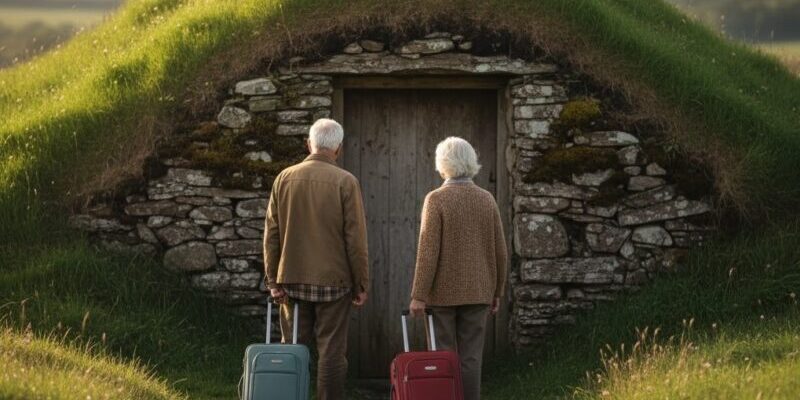
At dusk, Armando pointed toward the hill.
“Let’s go up… at least to rest.”
The climb was hard. Then Rosa stopped short.
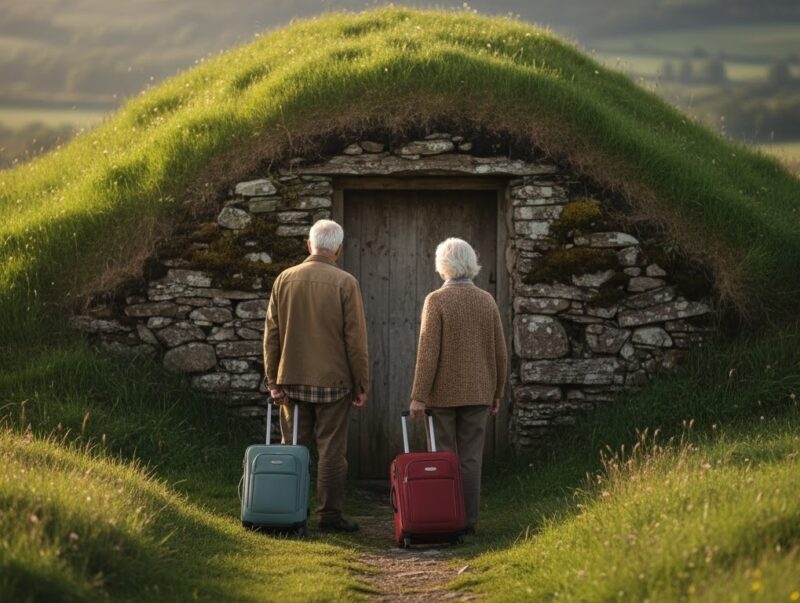
Between the rocks, a stone arch. And at the back… a wooden door set into the mountain.
Armando knocked. The sound echoed hollowly. He lifted a stone placed there on purpose: an old rusty key appeared.
“Armando… it’s dangerous,” Rosa whispered.
“More dangerous than sleeping outside?”
The door opened.
Inside… what they discovered there left them in shock. 😱
👇 Discover the full story just below, in the first comment 👇👇👇👇
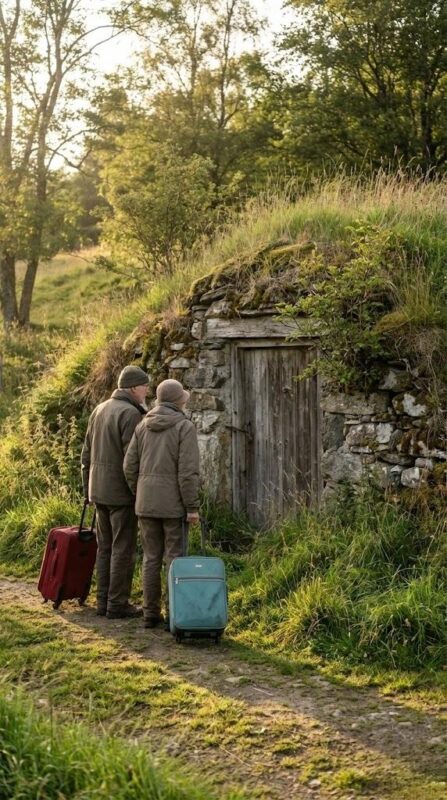
The door opened.
Inside: a house carved into the rock, clean, warm… and a table set for two. As if someone had been waiting for them.
On the table, a yellowed letter.
“For my beloved children”
Signed: Soledad Vargas.
Their sleep was light. At dawn, while moving the bed, they discovered a box of documents. Armando turned pale.
“Rosa… look…”
She read. The world swayed.
Her name. Her date of birth.
And her mother’s name: Soledad Vargas de Ramírez.

“Armando… this house… it’s me.”
Rosa held her breath. Before her stood a house sculpted into the mountain. Worn but sturdy armchairs, a carefully set table, a kitchen with a wood stove, shelves filled with preserves… and farther on, the shadow of a bedroom. Everything was too tidy for an abandoned refuge. Most unsettling: two plates, two cups, cutlery perfectly aligned, as if dinner had been interrupted and someone was about to return.
Armando lit an oil lamp. The glow revealed folded blankets, wood ready for winter, a pantry well stocked. This house had not only existed: it had been lovingly maintained. On the table, a yellowed letter: “To my dear children…” Rosa picked it up with trembling hands and read aloud, discovering Soledad Vargas, a mother who had built this refuge to wait for children who never returned.
That evening, for the first time since the eviction, they ate a hot meal. The stove warmed the soup, water ran in the sink… and for Rosa, something unexpected mixed with fear: comfort. This place had been waiting for their arrival.
The next day, in a cupboard, they found clean clothes and a box filled with photos. An elderly woman in them looked strangely familiar… like an older version of Rosa herself. Under the bed, an antique chest contained documents, letters, and photographs. Among them, the long-feared name: Rosa María Ramírez, born March 15, 1958… daughter of Soledad Vargas de Ramírez.
The words choked Rosa: her mother had existed. And she had waited, silently, building a home just for her. The letters revealed sacrifices, adoptions, and discreetly watching over Rosa and her brothers and sisters. Everything made sense now: every bit of help, every anonymous smile, every twist of fate.
The reunions were slow but deeply moving. Eduardo and Rafael, her brothers, learned of their mother’s existence and of Rosa. The past, the suffering, and the separations finally found meaning. The underground home became a place of rebirth, where generations reunited, and where Rosa understood that “coming home” is not a place, but a love rediscovered, even after decades.
Rosa smiled as she looked at the old wooden door:
“True love does not linger on what has been lost. It focuses on what can still be found.”