A homeless man was holding up a cardboard sign that read:
“Marry me. I only have one month left to live.”
I agreed because I felt sorry for him.
But after his funeral, a letter arrived in the mail… and as soon as I read the first few lines, all the color drained from my face.
For nearly two years, I had seen Elliot every morning on my way to work.
He was a quiet, respectful homeless man who usually sat near the entrance to my subway station.
Over time, we developed a little routine.
I would stop at the coffee stand and buy two cups—mine with cream, his black—then sit with him for a few minutes before heading to the office.
Most of the time, we talked about unimportant things: the weather, traffic, pigeons.
Sometimes Elliot joked about my work shoes or complained that people walking by were always in far too much of a hurry.
Then, on a freezing Tuesday morning last month, everything changed.
Elliot wasn’t asking for money.
Instead, he was sitting on the sidewalk with a cardboard sign resting on his knees.
Written across it in large black letters were the words:
“Marry me. I only have one month left to live.”
I stopped immediately.
Then I crouched down beside him and handed him his usual coffee.
“Elliot, what is this?”
He looked worse than I had ever seen him.
His face was pale, and his hands trembled as he held the cup between his fingers.
“The doctors say I only have about a month left,” he whispered.
I stared at him in shock.
“What happened?”
“Liver failure.”
My heart sank.
“Elliot… I’m so sorry.”
For a few moments, neither of us spoke.
Then I pointed to the sign.
“But why are you asking someone to marry you?”
He lowered his eyes.
“I don’t want to die as nobody, Clara.”
His voice broke.
“I want there to be at least one person whose name is connected to mine. Someone who can say I mattered to her. That I belonged to someone.”
I struggled to swallow the lump in my throat.
He continued:
“I don’t want the city to take care of everything after I die. I don’t want to end up as just another forgotten name on a form.”
That was all it took to convince me.
I had always had a soft spot for people who needed help.
I was single.
Elliot was dying.
And in my mind, it wasn’t really a marriage.
It was just paperwork.
A practical solution that could give a dying man a little dignity.
So, two days later, Elliot and I went to the courthouse.
We signed the papers.
There were no rings, no guests, no flowers, no reception.
Eleven minutes later, legally, I had become his wife.
I kept telling myself it wasn’t a real marriage.
It was only an administrative arrangement.
Three weeks later, Elliot died in a public hospice.
I stayed by his side during his final hours.
And I thought that was the end of our strange little story.
Until yesterday…
When I checked my mailbox, I found a thick white envelope with my name written on it in Elliot’s shaky handwriting.
The postmark was dated the day before he died.
I brought it inside and sat down at the kitchen table.
For a moment, I even smiled.
I thought Elliot had written me one final thank-you note.
Maybe a goodbye.
Or perhaps even one last joke.
I opened the envelope and unfolded several handwritten pages.
Then I began to read.
I was expecting something touching.
Something sad.
Something that would make me cry.
But after only a few sentences, my hands froze.
All the color drained from my face.
Because Elliot was finally confessing something he had never revealed to me while he was alive.
The real reason he had asked me to marry him… had absolutely nothing to do with the reason he had given me.
👉 Full story in the first comment. 👇👇
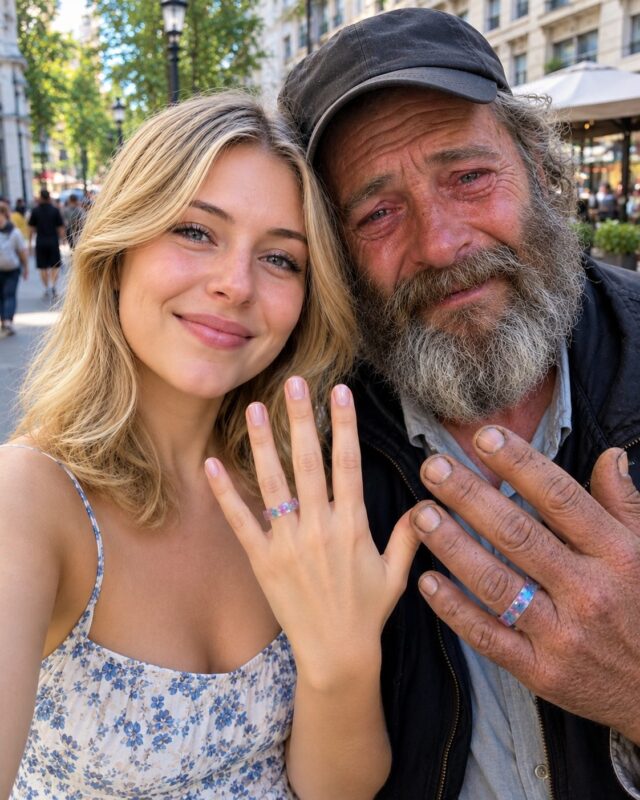
I reread Elliot’s letter several times.
He explained that his liver failure was real and that he truly had only a few weeks left to live.
But there was one important thing he had kept from me: a woman named Vivienne.
“Clara,
I never knew how to tell you all of this. You always tried to help me, but there was one thing you couldn’t fix: my loneliness.
Go back to the courthouse where we got married and ask for Vivienne. She’ll know what to tell you.”
The next day, I returned to the courthouse.
At the front desk, I was stunned to learn that Elliot had worked there for twenty-eight years.
A few minutes later, Vivienne came to see me.
She explained that Elliot had handled marriage records and had witnessed hundreds of ceremonies.
He helped couples, signed their documents… but he had never been married himself.
Vivienne then showed me an old box filled with records.
His name appeared everywhere:
Elliot, witness.
Then she placed our marriage certificate in front of me.
For the first time, Elliot was no longer a witness to someone else’s happiness.
He was one of the two names written on the document.
I picked up his letter again.
“I didn’t marry you because I wanted to be saved.
I married you because, for almost two years, you came back every morning.
You sat with me and looked at me as though I were simply Elliot—not a homeless man, not a problem that needed fixing.
I wanted to know what it felt like to be chosen.
I didn’t want to be saved.
I wanted someone to stay by my side.
You brought me coffee every morning for almost two years, but the most precious thing you gave me was your time.
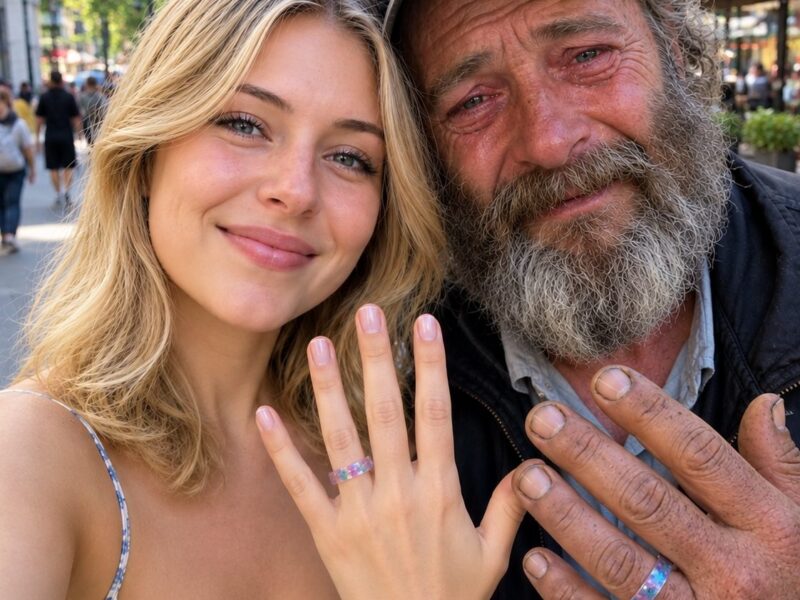
For someone who has spent his life feeling invisible, having someone sit beside him can become the most important thing in the world.
Thank you for being my wife.
Even if it was only for three weeks, to me, it was a lifetime.”
With tears in my eyes, I finally understood his message.
He had simply wanted someone to stay.
A few days later, I returned to the subway station where Elliot used to sit every morning.
I bought two coffees and sat down in his usual spot.
An exhausted-looking man approached and glanced at the second cup.
“Are you waiting for someone?”
I held the cup out to him.
“No. But you can sit down.”
He sat beside me.
I didn’t ask him anything.
I didn’t try to change his life.
I simply stayed there.
And I finally understood what Elliot had been trying to teach me:
Sometimes, helping someone doesn’t mean changing their life.
Sometimes, the greatest thing you can offer a lonely person is simply to sit beside them and stay.