“At 25, having become the guardian of my twin sisters after my mother’s death, I discovered—by overhearing a conversation—that my fiancée didn’t truly like them”
I am 25 years old. Six months earlier, my world collapsed. My mother passed away suddenly, leaving me alone with an immense responsibility: becoming the legal guardian of my two little twin sisters, Léa and Manon, barely ten years old. Overnight, I went from being a rational engineer to an improvised parent, my heart tight and my shoulders heavy.
Camille, my fiancée, suggested moving in to help me. At the time, I took it as a genuine act of love. She helped the girls with their homework, did their hair in the mornings, smiled and said, “I’ve always dreamed of having little sisters.” I wanted to believe it. I needed to believe it.
But some silences speak louder than promises.
One Tuesday, I came home early. In the hallway, I heard a voice I didn’t recognize—cold, sharp.
“You won’t be staying here long. I’m not going to sacrifice my youth for you. At the interview, you’ll say you want another family.”
My heart stopped.
A few minutes later, she was on the phone.
“They complicate everything… Once they’re adopted, the house and the insurance will finally be ours.”
I didn’t step into the room. I understood that the truth had to come out into the open—without me being the one blamed.
That very evening, I pretended to give in.
“Maybe you’re right…”
Her eyes lit up.
I even sped up the wedding preparations. She organized the reception with excitement, unaware that every detail was becoming a piece of the puzzle.
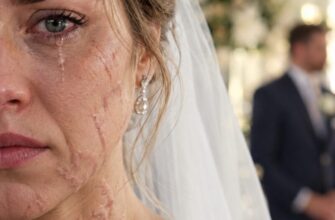
When the day arrived, in a packed hall, she began to speak, radiant.
I interrupted her calmly, a remote control in my hand.
“Tonight, we’re not celebrating a union… but the truth.”
And the screen lit up.
⬇️⬇️⬇️
(The rest in the first comment… 👇👇👇)

The first images froze the room. You could see the kitchen, the living room—fragments of our everyday life. Then her voice. Clear. Unfiltered. The sentences I should never have heard now echoed in front of everyone: her words about the girls, about her “wasted youth,” about the house she coveted more than our family.
A murmur swept through the hall. Camille went pale. She tried to laugh, then to deny it. But with every second, the truth grew heavier. Some people lowered their eyes. Others looked at Léa and Manon, sitting in the front row, clinging to each other.

I walked over to them and placed a hand on their shoulders.
“This is my family,” I simply said.
And for the first time in a long while, I felt no fear.
Camille left the room without a word. The wedding never took place. And strangely, that day was not an ending, but a beginning.

The weeks that followed were simple, almost quiet. Rushed mornings, homework spread across the table, improvised meals. Little by little, the house came back to life. Léa sang off-key while doing the dishes. Manon laughed too loudly at cartoons. And I learned how to truly be present.
The adoption was finalized a few months later. When the judge said my name, the girls looked up at me, proud. That evening, we lit a candle for Mom—no tears, just gratitude.
Before going to sleep, Léa whispered to me:

“We knew you would choose us.”
Sometimes life tests us cruelly. But when we choose truth, love always finds its place.