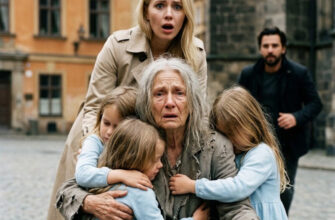
A billionaire’s daughter had only three months left to live… until the arrival of a new housekeeper who discovered the unthinkable.
No one dared to say it in the Wakefield mansion, but everyone felt it.
Little Léa was fading away.
The doctors had been firm, cold, almost inhuman: three months. Maybe less.
Three months to live.
Romain Wakefield, a respected billionaire, a man used to controlling everything, was facing for the first time a reality that money could not buy. He watched his daughter, powerless to save her.
Since his wife’s death, the mansion had become a strange place: immense, flawless… and terribly silent. A heavy silence that settled everywhere, even in people’s breathing.
Romain had tried everything: private doctors, cutting-edge equipment, nurses, soft music, imported toys, walls painted in Léa’s favorite color. Everything was perfect.
Except for what truly mattered.
Léa was there, yet absent. Her gaze seemed lost behind an invisible pane of glass. She barely spoke. She sat near the window, as if life were continuing without her.
So Romain spoke for two. He told stories, invented fairy tales, clung to every blink of her eyelashes as if it were a possible miracle.
Then Jeanne Bennett arrived.
No forced smile. No promises. Just a quiet gentleness, born of pain.
A few months earlier, Jeanne had lost her baby at birth. Since then, she had been surviving more than living.
When she saw the ad — care for a sick child, patience required — something tightened in her chest. Perhaps fate. Perhaps despair.
She was hired.
Jeanne rushed nothing. She observed. Cleaned. Tidied up. Opened the curtains. Brought flowers.
And above all, she respected Léa’s emptiness.
Because that emptiness, she knew it well.
She placed a small music box near the bed. At the first melody, Léa slightly turned her head. A tiny movement… but alive.
Jeanne read aloud from the hallway, asking nothing in return.
Little by little, the house changed. Not louder. But warmer.
Romain noticed a heartbreaking detail: Léa was holding the music box in her hands. She still wanted something.
Weeks passed. Trust was born.
One day, Léa let Jeanne brush her hair.
Then everything shifted.
At the slightest touch, Léa stiffened, clutched Jeanne’s shirt, and whispered in a fragile voice:
“It hurts… don’t touch me, Mom…”
Jeanne froze.
👉 What happened next shocked everyone… 😱
Discover the rest in the first comment 👇👇👇

Jeanne stood frozen.
Not because of the pain — that would have been understandable — but because of that word.
“Mom.”
Léa rarely spoke. And this word was no coincidence. It carried a memory, an old fear. Jeanne gently set the brush down and replied with controlled tenderness:
“— Okay… we’ll stop.”
That night, Jeanne couldn’t sleep. Léa’s mother was dead, yet the word returned with troubling precision. In the days that followed, she observed: Léa startled when someone approached from behind, tensed up at certain voices… and seemed worse after some medications.

The truth was waiting for her in a forgotten storage room.
Dusty boxes. Vials. Unknown names. Red labels. And always the same name: Léa Wakefield.
Jeanne photographed everything. She spent the night researching.
What she discovered chilled her blood: experimental treatments, severe side effects, substances banned in some countries.
This wasn’t care.
It was danger.
She began documenting everything: doses, reactions, schedules. Until the day Romain walked in and saw Léa peaceful, curled up against Jeanne. Disturbed, he spoke too sharply.
Léa panicked. She threw herself into Jeanne’s arms and screamed:
“Mom… don’t let him yell.”
That silence was different.

A silence of revelation.
Romain finally understood: his daughter wasn’t just sick. She was afraid.
The next day, he stopped several treatments. And slowly, Léa changed. She ate a little. Smiled. Asked for stories.
Jeanne consulted an independent doctor. The verdict was clear: the treatment was dangerous. One name kept coming up: Dr. Adrien Morrow.
They filed a lawsuit.
The case exploded. Trial. Media. Threats. But also other families. Other truths.
While the world accused, Léa returned to life. She drew again. Colors. Hands holding each other.
In court, her drawing was presented. Beneath it, these clumsy words:
“Now I feel safe.”
The verdict came down. Guilty.
Years later, Jeanne was no longer an employee. She was a mother.
And the house, once silent, was finally alive.
Because one day, a single word refused to be silenced.